

Mikroplastik im Duschwasser
Verstehen, was in Ihrem Duschwasser ist und wie es Ihre Gesundheit beeinflusst
Was ist es und wie gelangt es ins Wasser?
Mikroplastik sind winzige Plastikpartikel (kleiner als 5 mm), die weltweit in Wasserquellen gefunden werden. Sie stammen aus abbauendem Plastikmüll, synthetischen Textilien, Reifenabrieb und industriellen Prozessen.
Mikroplastik gelangt durch Regenwasserabfluss, der Plastikmüll mit sich führt, aus Kläranlagenabwasser, durch den Abbau von Plastikrohren und durch atmosphärische Ablagerungen ins Wasser. Studien haben in 83 % der weltweiten Leitungswasserproben Mikroplastik gefunden.
Gesundheitliche Auswirkungen durch Duschkontakt
⚠️ Duschspezifische Risiken
Die Exposition unter der Dusche ist besonders bedeutsam, da Sie Schadstoffe durch Hautabsorption, Inhalation von Dampf und direkten Kontakt mit Augen und Schleimhäuten während einer typischen 10-minütigen Dusche aufnehmen.
- Hautkontakt: Mikroplastik im Duschwasser kommt mit Ihrer Haut in Kontakt, obwohl Absorptionsstudien noch laufen
- Chemische Träger: Mikroplastik adsorbiert und transportiert andere Verunreinigungen (Schwermetalle, persistente organische Schadstoffe)
- Inhalation: Sehr kleine Partikel können im Duschdampf in die Luft gelangen
- Neues Problem: Die gesundheitlichen Auswirkungen von Mikroplastikexposition sind ein aktives Forschungsgebiet mit wachsenden Beweisen für Schäden
- Allgegenwärtig: Gefunden in menschlichem Blut, Lungen und Plazenta — jede Expositionsquelle ist wichtig
Regulierungsstandards & Gesundheitsrichtlinien
EPA vs EWG: Die Lücke zwischen legal und gesund
| Standard | Level |
|---|---|
| EPA Maximaler Verunreinigungsgrad (MCL) | Kein MCL (noch kein Bundesstandard) |
| EWG Gesundheitsrichtlinie | Keine spezifische Richtlinie (aufkommender Schadstoff) |
Mikroplastik wird in 83 % der Leitungswasserproben weltweit gefunden. Dies ist ein aufkommender Problembereich mit sich schnell entwickelnder Forschung zu den gesundheitlichen Auswirkungen.
Filtermethoden, die es entfernen
| Methode | Wirksamkeit | Hinweise |
|---|---|---|
| Sedimentfiltration | Entfernt Partikel >5 Mikron | Fängt größere Mikroplastikpartikel ab |
| Aktivkohleblock | Entfernt etwas Mikroplastik | Abhängig von der Porengröße |
| Umkehrosmose | Bis zu 99 % | Am effektivsten, aber für die Dusche unpraktisch |
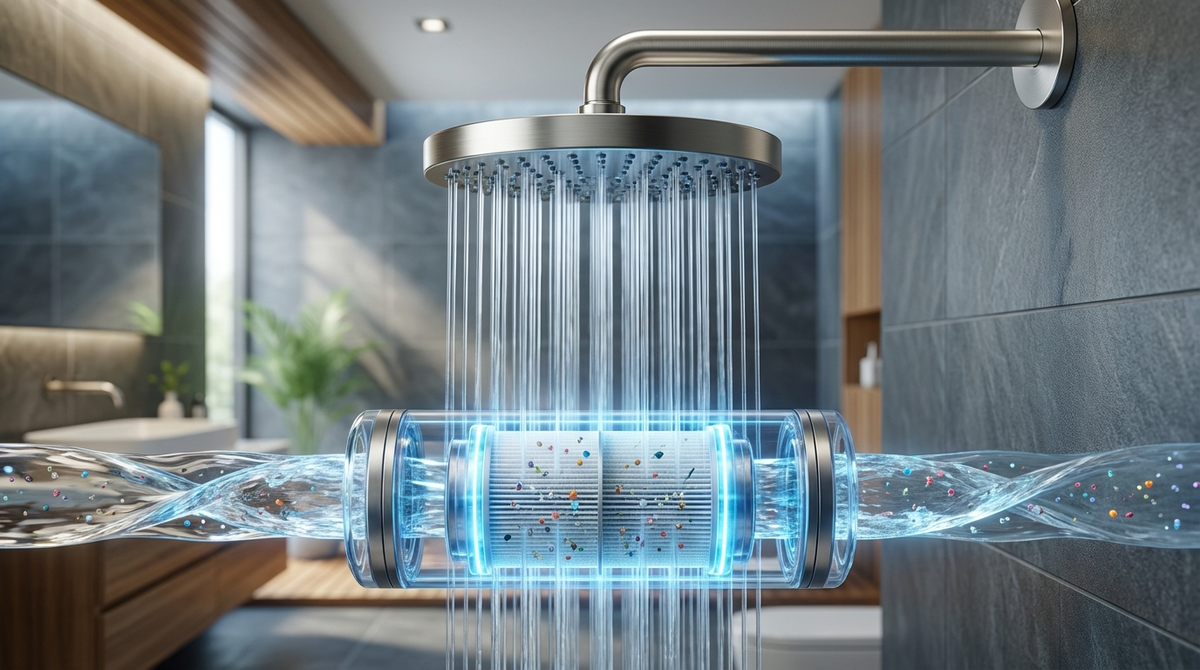
| Mehrstufiger Duschfilter | Reduziert größere Partikel | Die Sedimentfiltration der ersten Stufe hilft |
Wie Afina Duschfiltration helfen kann
Afinas mehrstufiges Filtersystem verwendet Aktivkohle und KDF-55-Medien, um Chlor, Schwermetalle und andere Verunreinigungen zu reduzieren – und schützt so Ihre Haut, Ihr Haar und Ihre allgemeine Gesundheit.
Am stärksten betroffene Städte
Obwohl dieser Schadstoff in landesweiten Wassersystemen gefunden werden kann, weisen diese Gebiete tendenziell höhere Konzentrationen auf:
- Alle Städte (allgegenwärtig im Wasser)
- Städtische Gebiete mit mehr Plastikmüll
- Gebiete mit Kunststoff-Wasserleitungen
Überprüfen Sie Ihre lokale Wasserqualität in der EWG Leitungswasser-Datenbank, indem Sie Ihre Postleitzahl eingeben.
Verwandte Lektüre
- Wasserqualität in Houston, Texas
- Wasserqualität in Phoenix, Arizona
- Wasserqualität in Philadelphia, Pennsylvania
Häufig gestellte Fragen
Gibt es Mikroplastik in meinem Duschwasser?
Sehr wahrscheinlich. Studien fanden Mikroplastik in 83 % der weltweiten Leitungswasserproben. Sie sind in Wassersystemen im Wesentlichen allgegenwärtig.
Kann Mikroplastik mir durch Duschen schaden?
Die Forschung läuft noch, aber Mikroplastik trägt andere Verunreinigungen und wurde in menschlichem Blut und Organen gefunden. Die Reduzierung der Exposition aus allen Quellen ist ratsam.
Entfernen Duschfilter Mikroplastik?
Mehrstufige Filter mit Sedimentfiltration können größere Mikroplastikpartikel entfernen. Eine feinere Filtration fängt kleinere ein, aber Nanoplastik bleibt eine Herausforderung.
Warum ist Mikroplastik im Wasser?
Plastikabfälle zersetzen sich zu winzigen Partikeln, die über den Abfluss in die Gewässer gelangen. Synthetische Kleiderfasern, Reifenabrieb und industrielle Prozesse tragen ebenfalls erheblich dazu bei.
See what's in your water.
Run a free 60-second report for your ZIP code.