

Last updated: April 2026.
Microplastics in Shower Water
Understanding what's in your shower water and how it affects your health
What Is It & How Does It Get Into Water?
Microplastics are tiny plastic particles (smaller than 5mm) found in water sources worldwide. They come from degrading plastic waste, synthetic textiles, tire wear, and industrial processes.
Microplastics enter water from stormwater runoff carrying plastic debris, wastewater treatment plant effluent, degradation of plastic pipes, and atmospheric deposition. Studies have found microplastics in 83% of tap water samples worldwide.
Health Effects From Shower Exposure
⚠️ Shower-Specific Risks
Shower exposure is particularly significant because you absorb contaminants through skin absorption, inhalation of steam, and direct contact with eyes and mucous membranes during a typical 10-minute shower.
- Skin contact: Microplastics in shower water contact your skin, though absorption studies are ongoing
- Chemical carriers: Microplastics adsorb and carry other contaminants (heavy metals, persistent organic pollutants)
- Inhalation: Very small particles may become airborne in shower steam
- Emerging concern: Health effects of microplastic exposure are an active area of research with growing evidence of harm
- Ubiquitous: Found in human blood, lungs, and placenta — every exposure source matters
Regulatory Standards & Health Guidelines
EPA vs EWG: The Gap Between Legal and Healthy
| Standard | Level |
|---|---|
| EPA Maximum Contaminant Level (MCL) | No MCL (no federal standard yet) |
| EWG Health Guideline | No specific guideline (emerging contaminant) |
Microplastics are found in 83% of tap water samples worldwide. This is an emerging area of concern with rapidly evolving research on health impacts.
Filtration Methods That Remove It
| Method | Effectiveness | Notes |
|---|---|---|
| Sediment Filtration | Removes particles >5 microns | Catches larger microplastics |
| Activated Carbon Block | Removes some microplastics | Depends on pore size |
| Reverse Osmosis | Up to 99% | Most effective but shower-impractical |
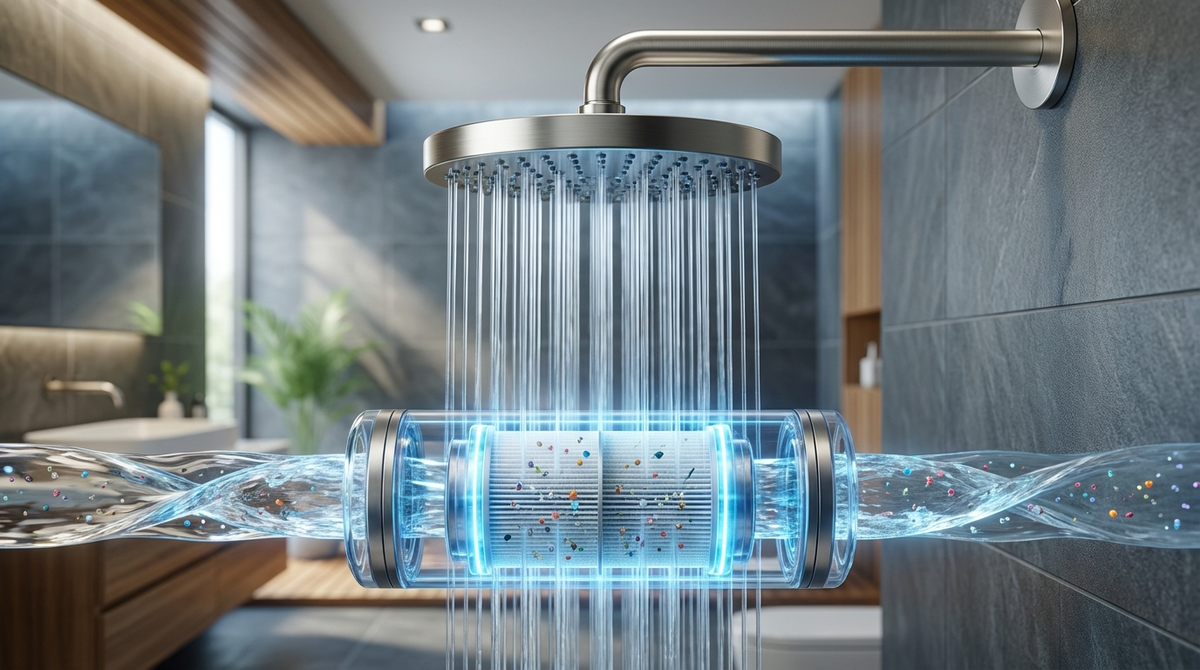
| Multi-Stage Shower Filter | Reduces larger particles | First-stage sediment filtration helps |
How Afina Shower Filtration Can Help
Afina's multi-stage filtration system uses activated carbon and KDF-55 media to reduce chlorine, heavy metals, and other contaminants — helping protect your skin, hair, and overall health.
Cities Most Affected
While this contaminant can be found in water systems nationwide, these areas tend to have higher levels:
- All cities (ubiquitous in water)
- Urban areas with more plastic waste
- Areas using plastic water mains
Check your local water quality at the EWG Tap Water Database by entering your zip code.
Related Reading
- water quality in Houston, Texas
- water quality in Phoenix, Arizona
- water quality in Philadelphia, Pennsylvania
Frequently Asked Questions
Are there microplastics in my shower water?
Very likely. Studies found microplastics in 83% of tap water samples worldwide. They're essentially ubiquitous in water systems.
Can microplastics harm me through showering?
Research is ongoing, but microplastics carry other contaminants and have been found in human blood and organs. Reducing exposure from all sources is prudent.
Do shower filters remove microplastics?
Multi-stage filters with sediment filtration can remove larger microplastic particles. Finer filtration catches smaller ones, but nano-plastics remain challenging.
Why are microplastics in water?
Plastic waste degrades into tiny particles that enter waterways through runoff. Synthetic clothing fibers, tire wear, and industrial processes also contribute significantly.
See what's in your water.
Run a free 60-second report for your ZIP code.