


Last updated: April 2026.
Is Gilbert, Arizona Shower Water Safe?
Understanding what's in your shower water is crucial for your health and well-being, especially in Gilbert, Arizona. As an expert water quality researcher, this report for 2026 highlights key aspects of Gilbert's shower water safety, helping you make informed decisions for healthier skin, hair, and respiratory comfort.
💧 Where Does Gilbert's Water Come From?
Primary Source: Salt River Project (SRP), Groundwater, Reclaimed Water
Gilbert's water supply is a blend of surface water from the Salt River Project, local groundwater sources, and a portion of highly treated reclaimed water. This multi-source approach ensures a reliable supply for the growing community. The water undergoes rigorous treatment processes to meet all state and federal drinking water standards.
Treatment: Chloramination (chlorine + ammonia), Filtration, Disinfection, pH adjustment
🔬 What's In Gilbert's Shower Water?
Here are the key contaminants detected in Gilbert's water supply based on real testing data from the EWG Tap Water Database:
| Contaminant | Level Found | EPA Limit | EWG Guideline | Status |
|---|---|---|---|---|
| Arsenic | 5.38 ppb | 10.0 ppb | 0.0040 ppb | ⚠️ Exceeds EWG Health Guideline (1346x above) |
| Haloacetic acids (HAA9) | 35.77 ppb | No federal limit | 0.060 ppb | ⚠️ Exceeds EWG Health Guideline (596x above) |
| Total trihalomethanes (TTHMs) | 47.32 ppb | 80.0 ppb | 0.150 ppb | ⚠️ Exceeds EWG Health Guideline (315x above) |
| Chromium (hexavalent) | 5.88 ppb | No federal limit | 0.020 ppb | ⚠️ Exceeds EWG Health Guideline (294x above) |
| Perfluorohexane sulfonate (PFHXS) | 0.0000 ppt | 1e-05 ppt | 0.0000 ppt | ⚠️ Exceeds EWG Health Guideline (231x above) |
| Haloacetic acids (HAA5) | 10.93 ppb | 60.0 ppb | 0.100 ppb | ⚠️ Exceeds EWG Health Guideline (109x above) |
| Bromate | 4.84 ppb | 10.0 ppb | 0.100 ppb | ⚠️ Exceeds EWG Health Guideline (48x above) |
| Nitrate | 4.34 ppm | 10.0 ppm | 0.140 ppm | ⚠️ Exceeds EWG Health Guideline (31x above) |
| Nitrate and nitrite | 3.45 ppm | 10.0 ppm | 0.140 ppm | ⚠️ Exceeds EWG Health Guideline (25x above) |
| Uranium | 1.89 pCi/L | 20.0 pCi/L | 0.430 pCi/L | ⚠️ Exceeds EWG Health Guideline (4x above) |
Contaminant Details
Arsenic
The health guideline of 0.004 ppb for arsenic was defined by the California Office of Environmental Health Hazard Assessment as a public health goal, the level of a drinking water contaminant that does not pose a significant health risk. This health guideline protects against cancer.
Comparison: State average: 3.97 ppb. National average: 0.624 ppb.
Shower Impact: Arsenic in shower water can be absorbed through the skin. Long hot showers increase exposure time and absorption.
Haloacetic acids (HAA9)
The health guideline of 0.06 ppb for haloacetic acids (HAA9) was defined by EWG . This health guideline protects against cancer.
Comparison: State average: 16.14 ppb. National average: 23.70 ppb.
Shower Impact: These disinfection byproducts become airborne in hot shower steam. You can inhale and absorb them through your skin, potentially increasing your exposure beyond just drinking water.
Total trihalomethanes (TTHMs)
The health guideline of 0.15 ppb for trihalomethanes was defined by in a peer-reviewed scientific study by EWG and represents a one-in-one-million lifetime cancer risk level. as a draft public health goal, the level of drinking water contaminant that does not pose a significant health risk. This health guideline protects against cancer.
Comparison: State average: 28.72 ppb. National average: 29.06 ppb.
Shower Impact: These disinfection byproducts become airborne in hot shower steam. You can inhale and absorb them through your skin, potentially increasing your exposure beyond just drinking water.
Chromium (hexavalent)
The health guideline of 0.02 ppb for chromium (hexavalent) was defined by the California Office of Environmental Health Hazard Assessment as a public health goal, the level of a drinking water contaminant that does not pose a significant health risk. This health guideline protects against cancer.
Comparison: State average: 3.36 ppb. National average: 0.440 ppb.
Shower Impact: Hexavalent chromium can be absorbed through the skin during bathing, adding to overall exposure beyond drinking water.
Perfluorohexane sulfonate (PFHXS)
The health guideline of 0.001 ppt for perfluorohexane sulfonate was defined by EWG based on studies by Phillipe Grandjean of Harvard University and many other independent researchers who found reduced effectiveness of vaccines and adverse impacts on mammary gland development from exposure to PFOA and PFOS, the two PFAS most widely detected in drinking water. This health guideline harm to the developing immune system.
Comparison: State average: 0.0000 ppt. National average: 0.0000 ppt.
Shower Impact: Contaminants in shower water can be absorbed through the skin and inhaled as steam, increasing your daily exposure beyond what you get from drinking water alone.
Haloacetic acids (HAA5)
The health guideline of 0.1 ppb for haloacetic acids (HAA5) was defined by as . This health guideline protects against cancer.
Comparison: State average: 7.52 ppb. National average: 19.82 ppb.
Shower Impact: These disinfection byproducts become airborne in hot shower steam. You can inhale and absorb them through your skin, potentially increasing your exposure beyond just drinking water.
Bromate
The health guideline of 0.1 ppb for bromate was defined by the California Office of Environmental Health Hazard Assessment as a public health goal, the level of a drinking water contaminant that does not pose a significant health risk. This health guideline protects against cancer.
Comparison: State average: 1.18 ppb. National average: 1.20 ppb.
Shower Impact: Contaminants in shower water can be absorbed through the skin and inhaled as steam, increasing your daily exposure beyond what you get from drinking water alone.
Nitrate
The health guideline of 0.14 ppm for nitrate was defined in a peer-reviewed scientific study by EWG and corresponds to one-in-one-million annual cancer risk level.
Comparison: State average: 2.29 ppm. National average: 0.824 ppm.
Shower Impact: While primarily a drinking water concern, nitrates can contribute to skin irritation during extended shower exposure.
Nitrate and nitrite
The health guideline of 0.14 ppm for nitrate and nitrite was defined by based on the equivalent health guideline for nitrate, as defined in a peer-reviewed scientific study by EWG. . This health guideline protects against one-in-one-million annual cancer risk level.
Comparison: State average: 2.57 ppm. National average: 0.780 ppm.
Shower Impact: While primarily a drinking water concern, nitrates can contribute to skin irritation during extended shower exposure.
Uranium
The health guideline of for uranium was defined by the California Office of Environmental Health Hazard Assessment as a public health goal, the level of a drinking water contaminant that does not pose a significant health risk. Three most common uranium isotopes are U-234, U-235 and U-238. All isotopes of uranium are radioactive, and the total radioactivity depends on the ratio of isotopes. This health guideline protects against cancer.
Comparison: State average: 1.95 pCi/L. National average: 1.03 pCi/L.
Shower Impact: Radioactive contaminants can become aerosolized in shower steam and inhaled, adding to overall exposure.
🧴 How Gilbert's Water Affects Your Skin, Hair & Health
When you shower, contaminants in the water don't just wash off — they're absorbed through your skin and inhaled as steam. Here's how Gilbert's water quality may be affecting you:
🧖 Skin Effects
- Dryness and irritation due to chloramines and hard water minerals.
- Exacerbation of eczema and other sensitive skin conditions.
- Premature skin aging and dull complexion from chemical exposure.
- Soap scum residue leading to clogged pores and breakouts.
💇 Hair Effects
- Dry, brittle, and damaged hair texture.
- Fading of dyed hair color from chlorine/chloramine.
- Mineral buildup (hard water) causing dullness and reduced lather.
- Scalp irritation and flakiness.
🫁 Respiratory Effects
- Irritation of nasal passages and throat from inhaled chloramine and DBPs.
- Potential triggers for asthma and allergy symptoms from shower steam.
- General respiratory discomfort during and after showering.
- Headaches or dizziness in poorly ventilated bathrooms due to chemical vapors.
✅ What You Can Do About It
Test Your Water Regularly
Understanding your home's specific water quality, especially for lead or unique contaminants, provides personalized insights beyond general city reports.
Install a Quality Shower Filter
A good shower filter can significantly reduce chlorine, chloramines, heavy metals, and disinfection byproducts, improving skin, hair, and respiratory health.
Improve Bathroom Ventilation
Running an exhaust fan or opening a window during and after showering helps dissipate chemical vapors, reducing inhalation exposure.
Limit Shower Duration and Temperature
Shorter, cooler showers reduce the amount of time skin and lungs are exposed to contaminants and minimize the drying effects of hot water.
Moisturize Immediately After Showering
Applying a high-quality moisturizer to damp skin helps lock in hydration and creates a protective barrier against environmental stressors.
🛒 Recommended Products for Gilbert Residents
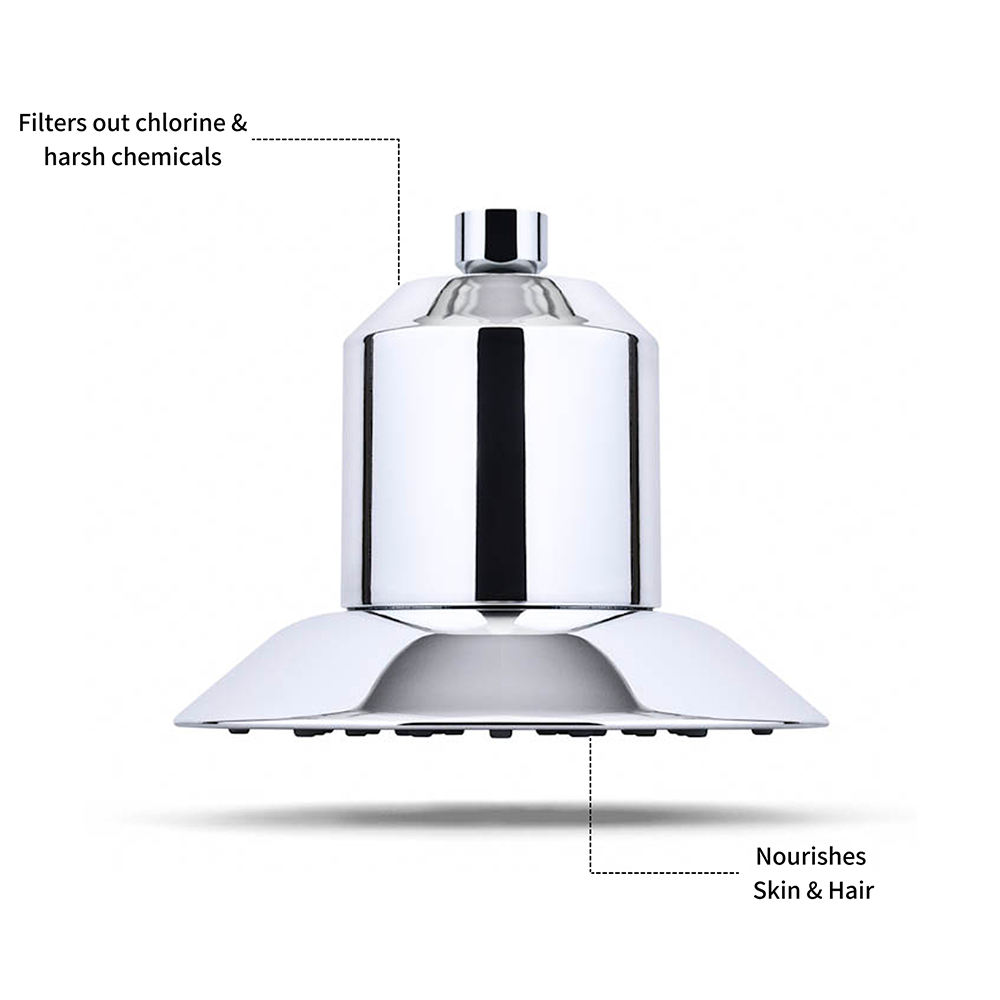
Afina Filtered Showerhead
15-stage filtered showerhead that removes chlorine, heavy metals, and other contaminants while providing great water pressure.
✨ All-in-one solution — filters water and gives you a premium shower experience
Shop Now →Afina Shower Filter
Universal shower filter that attaches to any existing showerhead. Removes chlorine, chloramine, and sediment.
✨ Keep your current showerhead and add powerful filtration
Shop Now →Afina Replacement Filter
Replacement filter cartridge for Afina shower filters. Lasts up to 6 months or 10,000 gallons.
✨ Easy replacement every 2-3 months to maintain peak filtration
Shop Now →❓ Frequently Asked Questions
Related Reading
- psoriasis triggered by shower water
- trihalomethanes in treated water
- hexavalent chromium in water
- shower water quality in Glendale, Arizona
- shower water quality in Mesa, Arizona
Is Gilbert tap water safe to shower in?
Gilbert's tap water meets all EPA drinking water standards, making it generally safe for showering. However, concerns like chloramines, disinfection byproducts, and hard water minerals can still impact skin, hair, and respiratory health for sensitive individuals. Taking proactive steps can enhance your shower experience.
Why does my skin feel dry and itchy after showering in Gilbert?
Gilbert's water is moderately hard and treated with chloramines. These factors can strip natural oils from your skin, leading to dryness, itchiness, and irritation. Hard water minerals can also leave a residue that clogs pores and exacerbates conditions like eczema.
Does Gilbert's water contain hard water minerals, and how does it affect my hair?
Yes, Gilbert's water contains significant levels of hard water minerals like calcium and magnesium. These minerals can build up on your hair, making it feel dull, frizzy, and difficult to manage, while also reducing the effectiveness of shampoos and conditioners.
How effective are shower filters for Gilbert's water?
Shower filters can be highly effective in reducing specific contaminants like chlorine, chloramines, and some heavy metals found in Gilbert's water. They can significantly improve water quality for showering, leading to softer skin, shinier hair, and reduced respiratory irritation from chemical vapors.
Can the chlorine smell in my Gilbert shower be harmful?
The chlorine (or chloramine) smell indicates the presence of disinfectants and potentially their byproducts. While these levels are regulated for safety, inhaling these chemicals in shower steam can irritate respiratory passages, particularly for those with asthma or allergies, and contribute to skin and hair dryness.
See what's in your water.
Run a free 60-second report for your ZIP code.