Last updated: April 2026.
Split Ends From Hard Water
Getting split ends faster than ever? Your water's mineral content may be accelerating the damage.
Why Does This Happen?
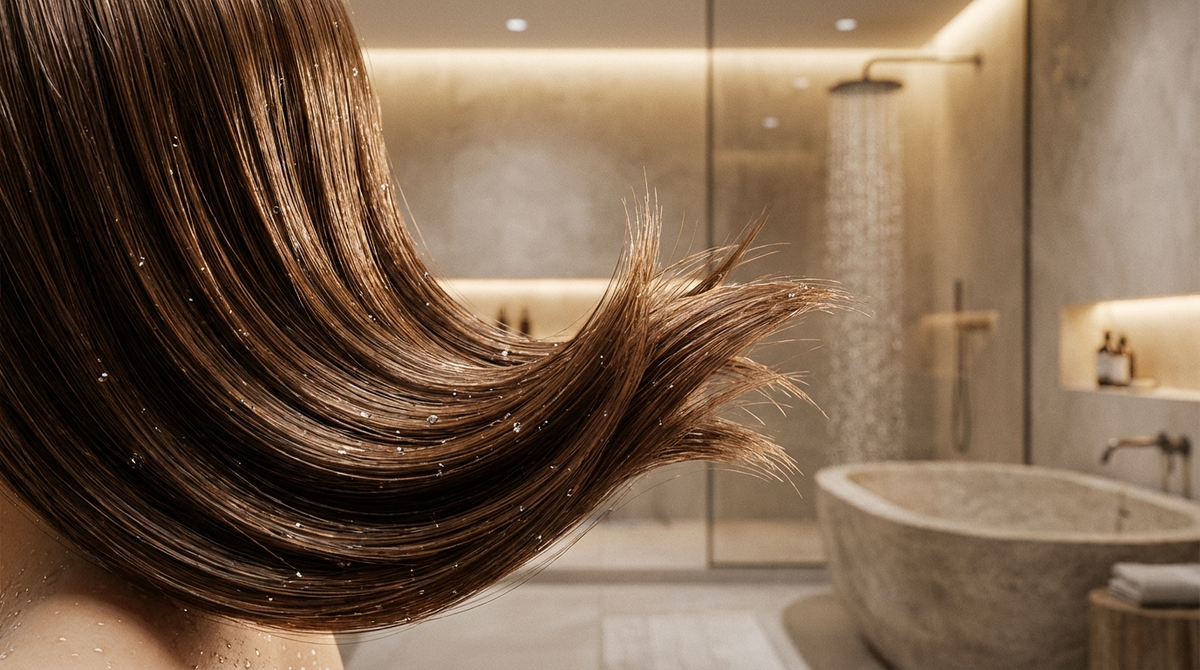
Hard water minerals accumulate on the hair shaft and disrupt the cuticle's protective layer, exposing the cortex to damage and splitting. Chlorine weakens protein bonds. The Journal of Cosmetic Science shows mineral deposits increase surface friction between strands, causing mechanical damage during brushing and styling.
The Water Quality Connection: Science & Research
Key Finding
Research consistently links shower water contaminants — particularly chlorine, chloramines, and hard water minerals — to skin and hair issues. Your skin absorbs a significant amount of these chemicals during a typical 10-minute shower.
Contaminants That Contribute to Split Ends From Hard Water
| Contaminant | Effect | Common In |
|---|---|---|
| Calcium | Disrupts cuticle layer | Hard water areas |
| Magnesium | Increases inter-strand friction | Hard water areas |
| Chlorine | Weakens protein bonds | All city water |
| Iron | Causes brittleness | Old pipes |
Data referenced from the EWG Tap Water Database, which tracks contaminants in water systems nationwide.
DIY Tests & Checks You Can Do at Home
Test Your Water
Purchase a water test kit (~$15-30 at hardware stores) to check chlorine levels and water hardness.
Check EWG Database
Search the EWG Tap Water Database by zip code for your local water quality report.
The Showerhead Check
White chalky buildup on your showerhead or glass doors? Those same mineral deposits are getting on your skin and hair.
The Travel Test
Notice if the problem improves when showering elsewhere (hotels, other cities). This strongly suggests your home water is the issue.
How Shower Filtration Helps
Shower filtration uses activated carbon and KDF-55 media to address the root causes. KDF media uses a copper-zinc alloy to reduce chlorine through electrochemical reduction. Activated carbon adsorbs chlorine, chloramines, and volatile organic compounds. Together, they can reduce chlorine by up to 99% and significantly decrease mineral effects on your skin and hair.
How Afina Shower Filtration Can Help
Afina's multi-stage filtration system uses activated carbon and KDF-55 media to reduce chlorine, heavy metals, and other contaminants — helping protect your skin, hair, and overall health.
Related Reading
Frequently Asked Questions
Can hard water cause split ends?
Yes. Mineral buildup roughens the cuticle and increases friction, while chlorine weakens protein bonds — making hair more prone to splitting.
Why do I get split ends so quickly?
If you're getting them faster than normal, water quality may be accelerating damage. Hard water and chlorine can double or triple the splitting rate.
Will a shower filter reduce split ends?
By protecting hair structure from mineral damage and chlorine, filtered water can significantly reduce new split ends forming.
Should I do a hard water hair detox?
Yes — when you install a filter, start with a clarifying wash to remove existing buildup. This gives hair a fresh start with clean water.
See what's in your water.
Run a free 60-second report for your ZIP code.