Last updated: April 2026.
Chloramine in Shower Water
Understanding what's in your shower water and how it affects your health
What Is It & How Does It Get Into Water?
Chloramine is a disinfectant formed by combining chlorine with ammonia. About 30% of U.S. water systems use it because it lasts longer in distribution systems.
Unlike chlorine, chloramine persists from treatment plant to showerhead. It doesn't dissipate easily, meaning prolonged contact during showering.
Health Effects From Shower Exposure
⚠️ Shower-Specific Risks
Shower exposure is particularly significant because you absorb contaminants through skin absorption, inhalation of steam, and direct contact with eyes and mucous membranes during a typical 10-minute shower.
- Harder to remove: Standard carbon filters remove chloramine much more slowly — specialized media needed
- Skin irritation: Can cause more severe reactions than chlorine in sensitive individuals
- Hair damage: Persistence means longer contact time and potentially more protein damage
- Respiratory effects: Vapors in hot shower steam may irritate respiratory tract
Regulatory Standards & Health Guidelines
EPA vs EWG: The Gap Between Legal and Healthy
| Standard | Level |
|---|---|
| EPA Maximum Contaminant Level (MCL) | 4.0 ppm (Maximum Residual Disinfectant Level) |
| EWG Health Guideline | Minimize exposure |
Found in approximately 30% of U.S. water systems. Its persistence and difficulty of removal make it a particular concern.
Filtration Methods That Remove It
| Method | Effectiveness | Notes |
|---|---|---|
| Catalytic Carbon | Up to 95% | Best for chloramine |
| KDF-55 Media | Up to 90% | Good for both chlorine/chloramine |
| Vitamin C | Up to 99% | Effective but shorter cartridge life |
| Standard Carbon | 50-70% | May not be sufficient |
How Afina Shower Filtration Can Help
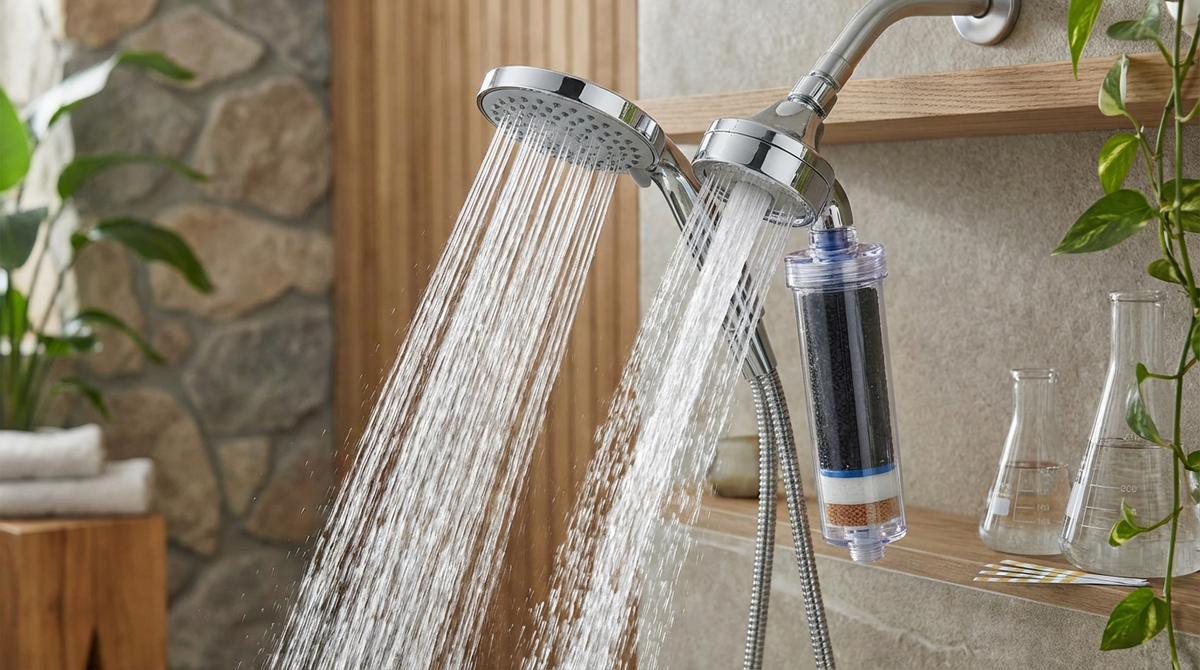
Afina's multi-stage filtration system uses activated carbon and KDF-55 media to reduce chlorine, heavy metals, and other contaminants — helping protect your skin, hair, and overall health.
Cities Most Affected
While this contaminant can be found in water systems nationwide, these areas tend to have higher levels:
Check your local water quality at the EWG Tap Water Database by entering your zip code.
Related Reading
- dry chapped lips after showering
- scalp dryness from shower water
- water quality in Houston, Texas
- water quality in Phoenix, Arizona
- water quality in Philadelphia, Pennsylvania
Frequently Asked Questions
What's the difference between chlorine and chloramine?
Chloramine is chlorine + ammonia. It lasts longer and is harder to remove. About 30% of U.S. systems use it.
How do I know if I have chloramine?
Check your water quality report. If water doesn't smell strongly of chlorine but still irritates skin, chloramine may be present.
Can regular shower filters remove chloramine?
Standard carbon is less effective. Look for catalytic carbon or KDF-55 media specifically rated for chloramine.
Is chloramine worse than chlorine for skin?
Some dermatologists consider it more irritating due to persistence. Eczema and sensitive skin sufferers often react more strongly.
See what's in your water.
Run a free 60-second report for your ZIP code.