



Last updated: April 2026.
Skin Rash After Shower
Post-shower rashes are more common than you think — and your water quality is often the trigger.
Why Does This Happen?
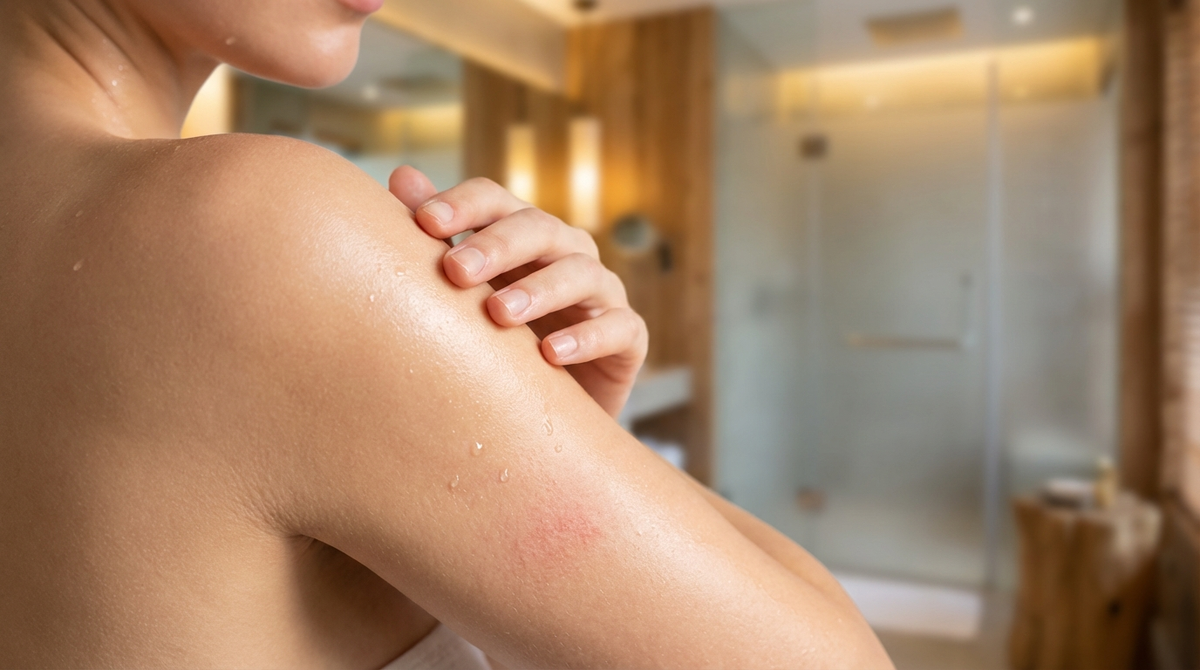
Shower water contaminants can trigger contact dermatitis — an inflammatory skin reaction. Chlorine and chloramine are known contact irritants that cause red, bumpy, or hive-like rashes. Hard water compounds irritation by disrupting the skin barrier. The Contact Dermatitis journal documents chlorine as a common cause of irritant contact dermatitis.
The Water Quality Connection: Science & Research
Key Finding
Research consistently links shower water contaminants — particularly chlorine, chloramines, and hard water minerals — to skin and hair issues. Your skin absorbs a significant amount of these chemicals during a typical 10-minute shower.
Contaminants That Contribute to Skin Rash After Shower
| Contaminant | Effect | Common In |
|---|---|---|
| Chlorine | Known contact irritant | All city water |
| Chloramine | Triggers dermatitis in sensitive skin | 30% of US systems |
| Hard water minerals | Disrupts skin barrier | 85% of US water |
| THMs | Inflammatory byproducts | Chlorine-treated water |
Data referenced from the EWG Tap Water Database, which tracks contaminants in water systems nationwide.
DIY Tests & Checks You Can Do at Home
Test Your Water
Purchase a water test kit (~$15-30 at hardware stores) to check chlorine levels and water hardness.
Check EWG Database
Search the EWG Tap Water Database by zip code for your local water quality report.
The Showerhead Check
White chalky buildup on your showerhead or glass doors? Those same mineral deposits are getting on your skin and hair.
The Travel Test
Notice if the problem improves when showering elsewhere (hotels, other cities). This strongly suggests your home water is the issue.
How Shower Filtration Helps
Shower filtration uses activated carbon and KDF-55 media to address the root causes. KDF media uses a copper-zinc alloy to reduce chlorine through electrochemical reduction. Activated carbon adsorbs chlorine, chloramines, and volatile organic compounds. Together, they can reduce chlorine by up to 99% and significantly decrease mineral effects on your skin and hair.
How Afina Shower Filtration Can Help
Afina's multi-stage filtration system uses activated carbon and KDF-55 media to reduce chlorine, heavy metals, and other contaminants — helping protect your skin, hair, and overall health.
Related Reading
- arsenic in drinking water
- mercury contamination in water
- is Houston shower water safe?
- is Phoenix shower water safe?
- is Philadelphia shower water safe?
Frequently Asked Questions
Why do I get a rash after showering?
Chlorine, chloramine, and hard water in your water can cause irritant contact dermatitis — red, bumpy, or itchy rashes after water exposure.
Is my shower water causing hives?
Some people develop chlorine sensitivity that presents as hives (urticaria). This is an inflammatory response to chemical irritants.
Will a shower filter prevent rashes?
If your rash is triggered by chlorine, a shower filter may significantly reduce or eliminate reactions by removing these irritants.
When should I see a doctor?
See a dermatologist if rashes are severe, persistent, or accompanied by swelling or breathing difficulties.
See what's in your water.
Run a free 60-second report for your ZIP code.