Last updated: April 2026.
Hard Water Minerals in Shower Water
Understanding what's in your shower water and how it affects your health
What Is It & How Does It Get Into Water?
Hard water contains high dissolved minerals (primarily calcium and magnesium). The USGS classifies water above 120 ppm as hard. About 85% of U.S. households have some degree of hard water.
As water flows through limestone and dolomite rock formations underground, it dissolves calcium and magnesium. Geographic areas with these formations have harder water.
Health Effects From Shower Exposure
⚠️ Shower-Specific Risks
Shower exposure is particularly significant because you absorb contaminants through skin absorption, inhalation of steam, and direct contact with eyes and mucous membranes during a typical 10-minute shower.
- Skin: Clogs pores, prevents moisturizer absorption, reacts with soap to form scum, disrupts pH
- Hair: Calcium/magnesium bind to shafts causing buildup, frizz, dullness, and tangling
- Scalp: Mineral deposits disrupt microbiome, contributing to dandruff and dryness
- Nails: Dehydrates nail plates, causing brittleness
- Soap interaction: Reacts with soap to form insoluble calcium stearate, reducing lathering
Regulatory Standards & Health Guidelines
EPA vs EWG: The Gap Between Legal and Healthy
| Standard | Level |
|---|---|
| EPA Maximum Contaminant Level (MCL) | No federal MCL (considered aesthetic) |
| EWG Health Guideline | No health guideline (cosmetic concern) |
The USGS reports 85% of U.S. water is hard. Cosmetic effects on skin and hair are well-documented in dermatological literature.
Filtration Methods That Remove It
| Method | Effectiveness | Notes |
|---|---|---|
| KDF-55 Media | Reduces scale formation | Inhibits mineral crystallization |
| Ion Exchange (softener) | Up to 99% | Whole-house solution |
| TAC (Template Assisted) | Prevents scale | Doesn't remove but prevents deposits |
How Afina Shower Filtration Can Help
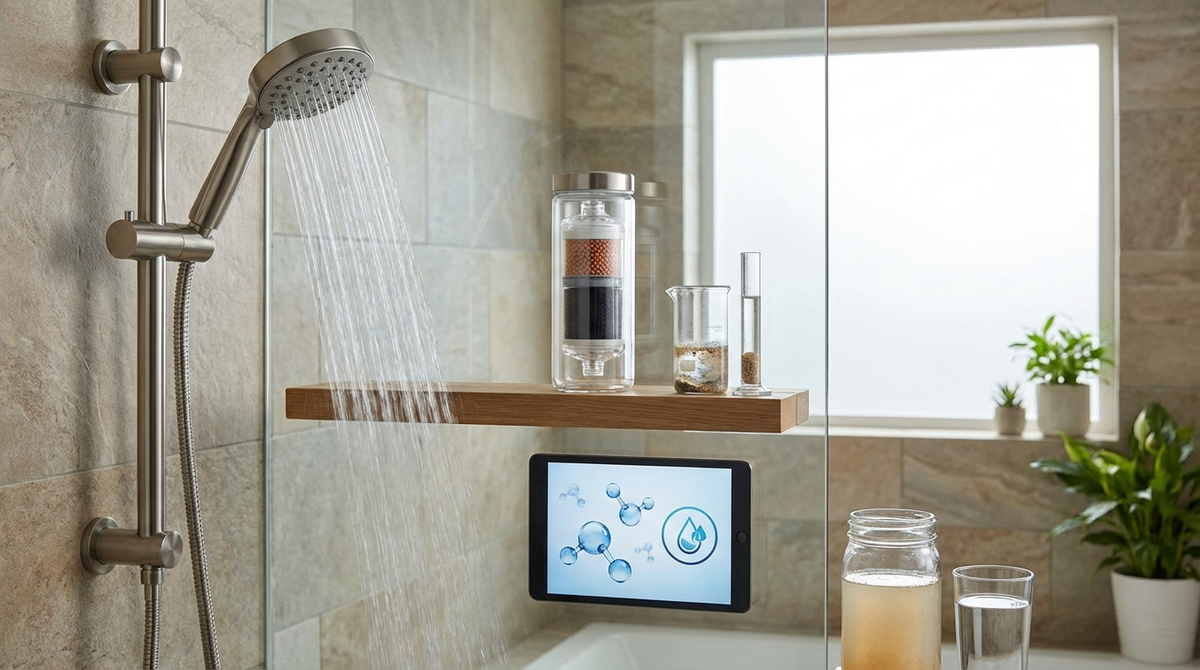
Afina's multi-stage filtration system uses activated carbon and KDF-55 media to reduce chlorine, heavy metals, and other contaminants — helping protect your skin, hair, and overall health.
Cities Most Affected
While this contaminant can be found in water systems nationwide, these areas tend to have higher levels:
Check your local water quality at the EWG Tap Water Database by entering your zip code.
Related Reading
- split ends caused by hard water
- shower water turning hair brassy
- water quality in Houston, Texas
- water quality in Phoenix, Arizona
- water quality in Philadelphia, Pennsylvania
Frequently Asked Questions
How do I know if I have hard water?
Signs: white spots on dishes, poor soap lather, showerhead buildup, dry skin/hair. A $10 test kit can confirm your exact hardness.
Is hard water bad for you?
Not a health hazard — calcium and magnesium are dietary minerals. But cosmetic damage to skin and hair is significant.
Can a shower filter soften water?
Filters reduce mineral effects through KDF media. For true softening, a whole-house ion exchange system is needed.
What's ideal hardness for showering?
Below 60 ppm (soft) is ideal. 60-120 is moderate. Above 120 ppm likely contributes to skin and hair problems.
Where is water hardest?
Great Plains, Southwest, and Upper Midwest. Cities like Indianapolis, Las Vegas, Phoenix have some of the hardest water.
See what's in your water.
Run a free 60-second report for your ZIP code.